outreach
What Is an ICP in B2B SaaS Outreach Explained

Your outreach team sent 2,000 messages and closed zero deals. The problem probably isn't your copy — it's who you're targeting. Here's what an ICP actually is.
You sent 2,000 cold messages last month. Three replies. Zero closed deals. Your copy is fine, your offer is solid, so what's going wrong? You're probably messaging the wrong people — and no amount of clever wording fixes that.
What is an ICP in B2B SaaS?
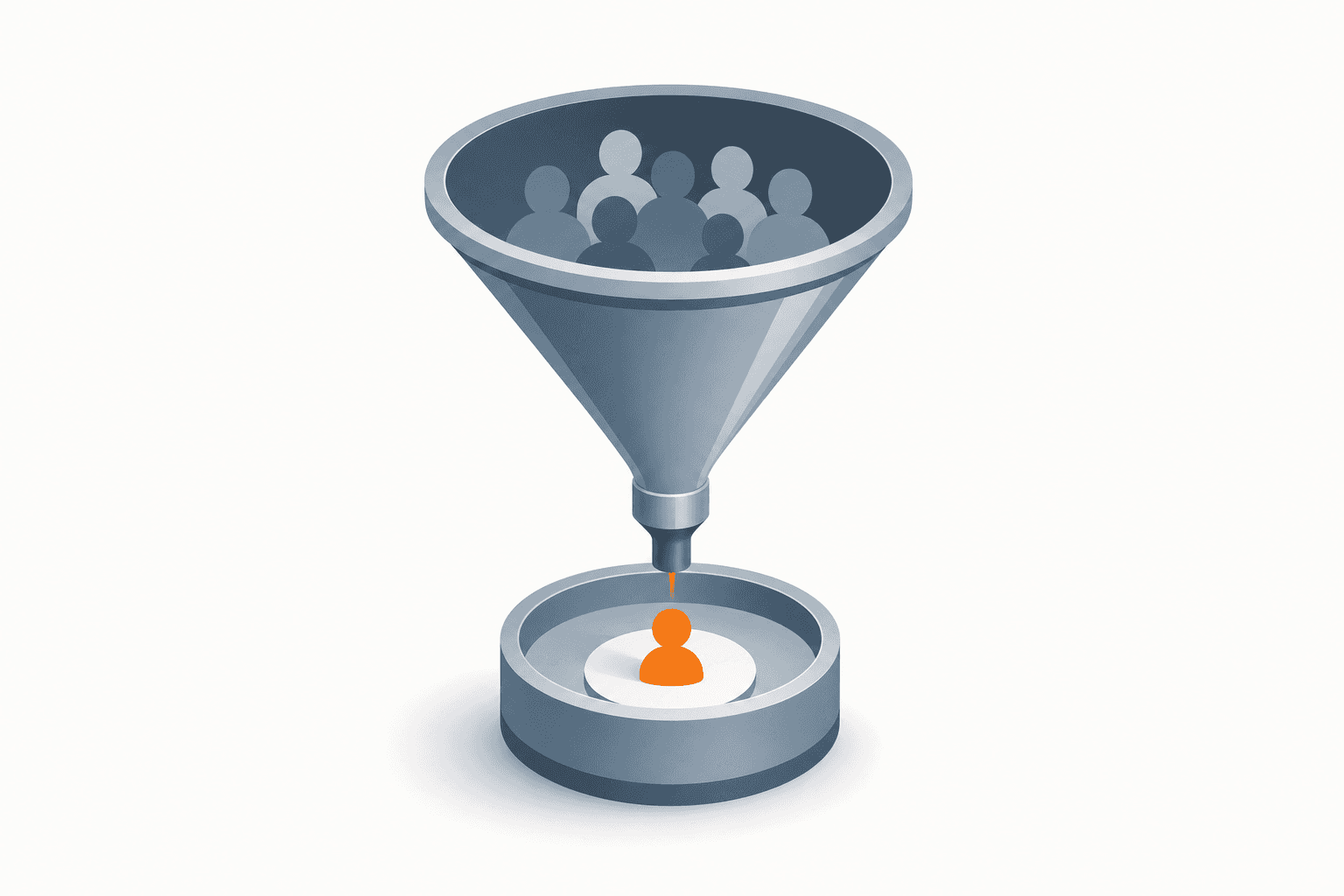
An ICP, or Ideal Customer Profile, is a specific description of the company that gets the most value from your product and is most likely to buy, renew, and expand. It's usually defined by 4-6 firmographic criteria: company size (often 50-500 employees for mid-market SaaS), industry, tech stack, revenue range, and a trigger event like recent funding or team growth. A tight ICP means your sales team can name a target company in one sentence and know exactly why it belongs on the list.
This isn't the same as a buyer persona. A persona describes the individual human you're messaging — their job title, their daily frustrations, what they read. An ICP describes the company they work at. You need both, but the ICP comes first: no point building a persona for someone at a company that will never buy.
Why does a narrow ICP outperform a broad one?
Teams that narrow their ICP typically see reply rates jump because the message finally matches a real, specific pain the recipient has — not a generic pitch that could apply to anyone. A broad ICP like "any B2B company with 10+ employees" forces you to write vague copy that resonates with no one in particular. A narrow ICP like "Series A fintech startups, 20-80 employees, using Stripe, hired a Head of Sales in the last 90 days" lets you write a message that sounds like you actually did research.
The math is simple: fewer, better-fit prospects convert at a higher rate than a large pile of loosely-qualified ones. Agencies running vertical-specific outreach already know this — targeting by niche beats targeting by volume almost every time.
What criteria actually belong in an ICP?
Company size — employee count or revenue band where your product fits without being overkill or underpowered
Industry or vertical — the sectors where your product solves a known, budgeted problem
Tech stack — tools they already use that signal compatibility or a gap you fill
Growth signals — recent funding, hiring sprees, new leadership, expansion into new markets
Geography — regions where you can support, bill, and legally sell
Buying trigger — an event that creates urgency, like a compliance deadline or a competitor's price hike
How do you turn an ICP into an outreach list?
An ICP is useless sitting in a slide deck. It has to become a filter you apply to real prospect data. Start with your existing best customers — the ones who bought fast, never haggled, and expanded their contract. Pull the firmographics they share and that's your first draft ICP.
From there, you build a sourcing pipeline that matches those criteria. For B2B SaaS teams running outreach on Telegram, this often means combining decision-maker lookups with niche community targeting. CRMChat automates this by letting you pull verified contact and company data, then route matching leads directly into CRMChat's CRM pipeline for outreach — so your ICP filter and your outreach tool aren't two disconnected systems.
Define your 4-6 ICP criteria in writing before sourcing a single lead
Pull firmographic and contact data that matches those criteria
Segment leads by fit tier — perfect match, good match, stretch — and message each differently
Track reply and close rates by segment, not just overall
Revisit the ICP every quarter as your product and best customers evolve
What happens when you skip defining an ICP?
Teams without a documented ICP tend to chase every inbound lead regardless of fit, which quietly drags down close rates and inflates churn. Sales reps waste calls qualifying companies that were never going to buy, and customer success ends up supporting accounts that churn within two quarters because the product never fit their actual workflow. LeadBridge, a B2B growth agency, saw this firsthand — narrowing targeting to specific decision-maker roles (Directors of Production, CIOs, Plant Managers) across defined verticals is part of what drove their 90 qualified SQLs across three enterprise campaigns.
CRMChat includes multi-account outreach and CRM tools built for exactly this kind of segmented targeting — agencies and GTM teams use isolated workspaces to run separate ICP-matched campaigns per client without the lists bleeding into each other. If you're running outreach through an agency, this is also worth asking about directly — see how agencies structure this in the media buyer onboarding process for a parallel example of targeting discipline paying off.
How often should you revisit your ICP?
Review your ICP every quarter, or immediately after any product pivot, pricing change, or a stretch of unusually fast or unusually slow deals. If your best new customers suddenly look different from your historical ICP, that's a signal the market shifted or your product now serves a different segment better. Don't treat the ICP as a one-time exercise — it's a living filter, and stale filters quietly let bad-fit leads back into your pipeline.